



Smart Tecar: Technical Overview & Therapeutic Principles
1. Introduction
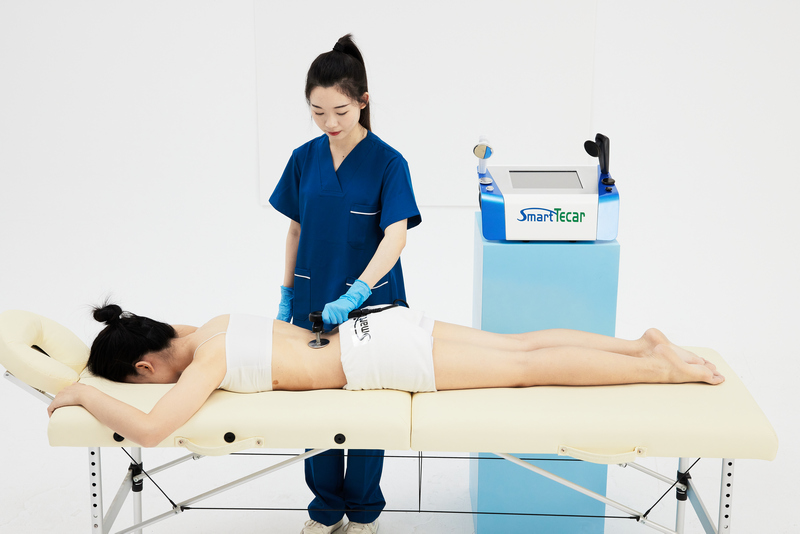
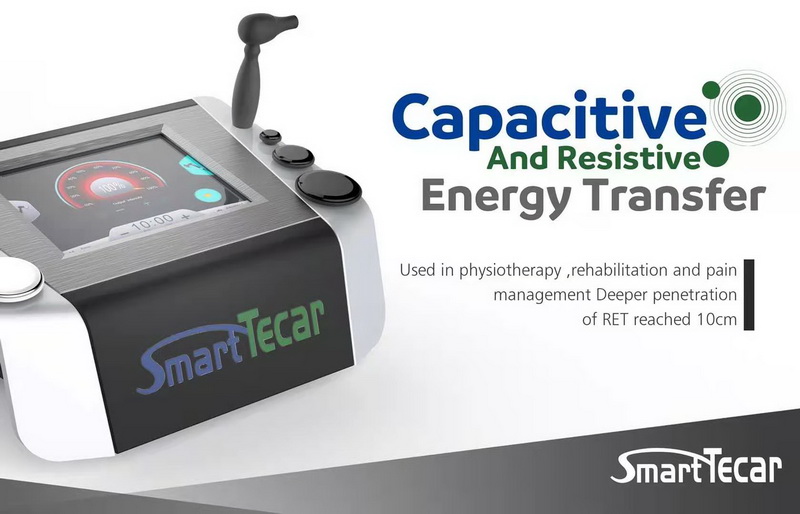
The Smart Tecar is a state-of-the-art, portable capacitive and resistive energy transfer (Tecar) therapy device, engineered for professional physiotherapy, sports medicine, and rehabilitation environments. Operating at radiofrequency (RF) energy, it leverages endogenous hyperthermia to stimulate tissue repair, reduce pain, and accelerate recovery, all within a compact, user-friendly desktop form factor. This system delivers controlled, deep-tissue thermal therapy with dual-mode applicators, a high-resolution touchscreen interface, and a large RET ground pad, enabling versatile treatment across superficial and deep musculoskeletal structures.
2. Core Technology & Working Principle
2.1 Tecar Therapy Fundamentals
Tecar (Transfer Capacitive and Resistive Energy) therapy uses high-frequency alternating current (typically 300kHz–450kHz) to induce endogenous heat within biological tissues, rather than applying external heat sources. The body acts as a conductor in the electrical circuit, generating thermal energy through molecular friction (Joule heating).
This process triggers three key physiological responses:
- Vasodilation: Increased local blood flow to deliver oxygen and nutrients, while accelerating waste product clearance (e.g., lactic acid).
- Metabolic Activation: Enhanced cellular metabolism in fibroblasts and chondrocytes, supporting collagen synthesis and tissue regeneration.
- Neuromodulation: Modulation of nociceptor sensitivity, providing both immediate and long-term pain relief via the gate-control mechanism and reduced inflammatory mediator release.
2.2 Dual-Mode Operation (CET & RET)
The Smart Tecar supports two distinct energy delivery modes, optimized for different tissue types and treatment depths:
表格
| Mode | Full Name | Function & Mechanism | Primary Applications |
|---|---|---|---|
| CET | Capacitive Energy Transfer | Uses an insulated applicator to create an electric field, generating heat primarily in superficial, high-water-content tissues (muscles, skin, fascia). The applicator acts as one plate of a capacitor, with the patient’s body as the other. | Myofascial pain, muscle strains, edema reduction, superficial inflammation |
| RET | Resistive Energy Transfer | Uses a non-insulated applicator paired with a large conductive ground pad to complete the circuit, directing energy to deeper, denser tissues (tendons, ligaments, joints, bone). Current flows through the body, generating heat in tissues with higher electrical resistance. | Chronic tendinopathies, joint pain, deep scar tissue, osteoarthritis, sports injury recovery |
The Smart Tecar’s ground pad ensures uniform current distribution during RET treatments, preventing uneven heating and enhancing patient safety.
3. Hardware & System Design
3.1 System Architecture
- Control Unit: Compact desktop design with a 7-inch color touchscreen, providing real-time parameter monitoring (power, frequency, treatment time) and intuitive operation. The interface includes pre-programmed protocols for common conditions (e.g., cervical spondylosis, lumbar pain, tennis elbow) and customizable manual modes.
- Applicator Set: Includes multiple interchangeable applicators (small/large) for precise targeting of different body areas:
- Large CET/RET applicators for broad muscle groups (back, legs).
- Small, precision applicators for localized treatments (joints, trigger points, facial areas).
- Safety & Compliance: Built-in overheat protection, short-circuit prevention, and adjustable power limits to ensure patient and operator safety during continuous use.
3.2 Key Specifications
| Parameter | Details |
|---|---|
| Frequency Range | 300kHz (RET) / 450kHz (CET) (tissue-specific optimization) |
| Power Output | 0–100W (adjustable in 1W increments) |
| Treatment Time | 0–30 minutes (programmable per session) |
| Applicator Compatibility | Dual-mode (CET/RET) interchangeable probes |
| Power Supply | 100–240V AC, 50/60Hz (universal input) |
4. Clinical Applications & Evidence-Based Benefits
4.1 Indications
- Acute & Chronic Pain Management: Back pain, neck pain, shoulder impingement, and myofascial trigger points.
- Sports Injury Rehabilitation: Sprains, strains, tendonitis (tennis elbow, golfer’s elbow), and post-training muscle recovery.
- Post-Traumatic & Post-Surgical Care: Reduction of edema, hematoma resolution, and scar tissue remodeling.
- Chronic Musculoskeletal Conditions: Osteoarthritis, rheumatoid arthritis, fibromyalgia, and chronic tendinopathies.
- Aesthetic & Wellness: Localized fat reduction, skin tightening, and improved lymphatic drainage (in non-medical settings).
4.2 Therapeutic Outcomes
- Immediate Pain Relief: 30–50% reduction in perceived pain scores (VAS) post-treatment in acute musculoskeletal pain cases.
- Accelerated Recovery: Reduced rehabilitation time by 30–40% in sports injuries, as supported by clinical studies on Tecar therapy.
- Improved Range of Motion: Reduced muscle spasm and joint stiffness, leading to enhanced functional mobility.
- Non-Invasive & Drug-Free: Eliminates the risks and side effects associated with pharmaceutical interventions, making it suitable for long-term use.
5. Operational Workflow & Safety Protocols
- Patient Assessment: Evaluate contraindications (e.g., pacemakers, pregnancy, active infections, metal implants in the treatment area) and confirm suitability for Tecar therapy.
- Treatment Setup: Select the appropriate mode (CET/RET) and applicator based on the target tissue depth and condition. For RET, place the ground pad on the patient’s contralateral limb or a distant site to complete the circuit.
- Parameter Adjustment: Set power and time based on patient tolerance and clinical protocol. Start with low power and gradually increase to avoid discomfort or overheating.
- Treatment Delivery: Move the applicator continuously over the treatment area to ensure uniform heating. Avoid static application to prevent localized burns.
- Post-Treatment Care: Advise patients to stay hydrated and avoid strenuous activity for 24 hours post-treatment to maximize benefits.
6. Conclusion
The Smart Tecar represents a fusion of advanced RF technology and clinical ergonomics, delivering the proven benefits of Tecar therapy in a portable, accessible package. Its dual-mode design, intuitive interface, and safety-focused engineering make it an ideal solution for physiotherapists, sports medicine practitioners, and wellness clinics seeking to offer evidence-based, non-invasive pain management and rehabilitation. By combining efficacy with ease of use, the Smart Tecar enables personalized treatments that address both acute injuries and chronic conditions, supporting faster recovery and improved patient outcomes.